Amytha Font: Elegant Script for Creative Makers
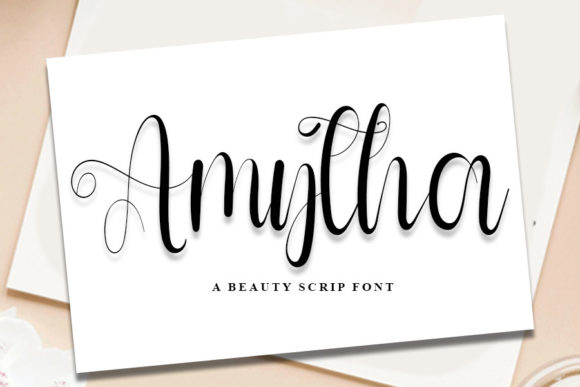
As a small business owner who loves crafting custom labels and designing printable art, I’ve spent hours testing Amytha on real projects. This delicate and elegant script calligraphy font has quickly become one of my go-to choices for everything from candle labels to wedding stationery. Its distinct and well rounded letters make this font a masterpiece that brings a touch of sophistication to any handmade creation.
Amytha for Candle Labels and Boutique Packaging
When I first tried Amytha on a candle label mockup, I was immediately struck by how it elevated the overall look. The soft curves and flowing strokes gave the labels a refined, artisanal feel that perfectly matched the organic nature of handmade candles. Whether I was labeling soy candles or beeswax tarts, Amytha added a level of elegance that made the products stand out on my shop shelves.
For boutique packaging, Amytha works especially well when paired with a clean sans serif font. The contrast between the handwritten style of Amytha and the modern simplicity of a sans serif creates a balanced, professional look. I used it on gift boxes and product tags, and customers often commented on how the font made the packaging feel more personal and special.
Amytha for Greeting Cards and Wedding Invitations
I recently designed a set of wedding invitations using Amytha as the main text. The font’s graceful lines and consistent spacing made it easy to read while still maintaining a romantic, vintage vibe. It worked beautifully for both the couple’s names and the event details, adding a sense of timeless charm to the design.
On greeting cards, Amytha adds a warm, handcrafted feel that’s perfect for birthdays, thank-you notes, and seasonal messages. I found that it pairs well with subtle textures or watercolor backgrounds, making each card feel like a unique piece of art. For digital printables, the font’s versatility allows for creative layouts without sacrificing clarity or readability.
Amytha for Digital Printables and Wall Art
When I created a printable wall art set, Amytha was the obvious choice for the typography. Its smooth, flowing style complemented the minimalist design of the artwork, and the font’s legibility at larger sizes made it ideal for display purposes. I used it for quotes, affirmations, and decorative headings, and it never felt too ornate or hard to read.
For printable planners and journal pages, Amytha adds a personal touch that makes the pages feel more intentional. I used it for section headers and title pages, and the font’s softness helped create a calming, organized aesthetic. It also works well for digital templates, where its style can be adjusted to fit different layout needs without losing its character.
Amytha for Product Tags and Merchandise Design
Testing Amytha on product tags for mugs and tote bags revealed how well it translates to physical merchandise. The font’s rounded edges make it easy to read up close, even on small surfaces. I used it for custom mug designs and found that it looked great with both solid colors and patterned backgrounds.
For clothing tags and merchandise labels, Amytha maintains its elegance without being too fussy. It’s ideal for boutique-style shops that want to convey a sense of care and craftsmanship. However, I would avoid using it for very tiny text or dense information, as the font’s decorative elements may become difficult to read in those cases.
Amytha for Seasonal Crafts and Holiday Tags
During the holiday season, I experimented with Amytha on Christmas tags and farmhouse signs. The font’s soft, flowing style gave the designs a cozy, inviting feel that matched the seasonal theme. It worked especially well for phrases like “Merry Christmas” or “Season’s Greetings,” where a bit of flair is appreciated but not overwhelming.
For printable holiday cards and ornament designs, Amytha added a personal touch that felt authentic and handmade. I found that it paired well with simple illustrations or minimalistic graphics, allowing the font to take center stage without competing with other design elements.